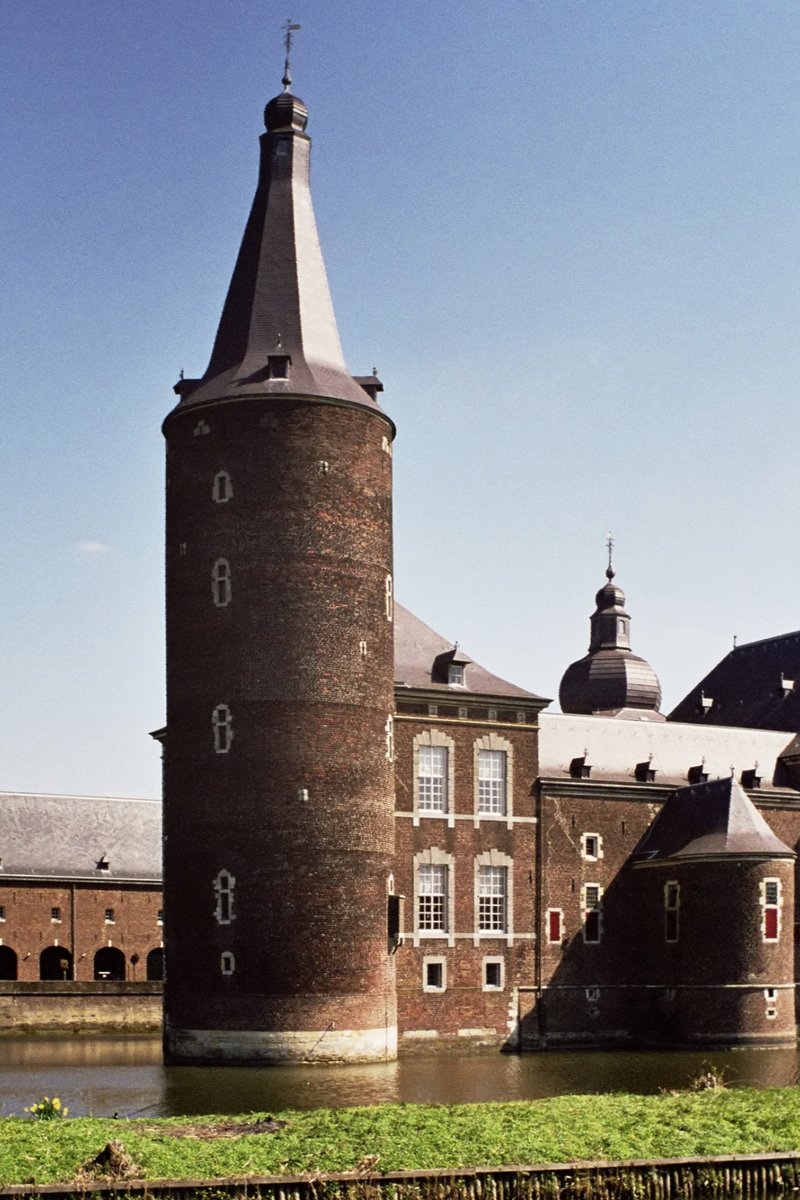
Hoensbroek Castle is one of the largest moated castles in the Netherlands, its four brick wings and twin gatehouse towers rising straight from the water on the edge of the town that shares its name, in Zuid-Limburg near Heerlen. The earliest stronghold on the site was a fortified motte around 1225, and the oldest part still standing — the tall round tower — was raised by Herman Hoen around 1360, giving the castle its family and its name.
Over the following four centuries the Van Hoensbroeck family expanded the castle in stages, adding wings and towers through the 14th, 17th and 18th centuries until it became one of the largest strongholds of its kind between the Rhine and the Meuse — a castle of more than 67 rooms, halls and chambers behind its moat. The 18th-century apartments show a lighter, French-influenced hand, with illusionistic ceiling paintings set against the castle's older, sterner stonework.
The Van Hoensbroeck family held the castle for close to six centuries, until the line ended in the late 18th century. It passed through private hands and years of decline before a foundation bought it in 1927 and restored it across two long campaigns, from 1930 to 1940 and again from 1986 to 1989. Listed as a Rijksmonument since 1967, Hoensbroek is now run as a museum, with its dungeon, towers and period rooms open on a timed, self-guided route.